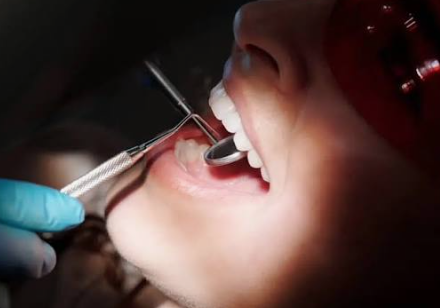
“But my tooth doesn’t hurt. Do I really need to treat it?”
It’s a very reasonable question. Many dental problems can develop quietly, without causing pain in the early stages. At the same time, not every dental finding needs immediate treatment.
Good dental care is not about treating everything that can be treated. It is about understanding what is happening, assessing the risks and choosing the right approach for that particular tooth and patient.
Why would a dentist recommend treatment if there is no pain?
Pain is only one sign of a dental problem—and often not the first one. A cavity can gradually become larger without causing discomfort. Gum disease can progress without significant pain. An old filling may be weakening or leaking even though the tooth feels completely normal. By the time pain appears, the problem may sometimes have progressed enough to require more extensive treatment. That is why your dentist may recommend treatment based on what they can see during an examination or on an X-ray, even when you feel perfectly fine.
Does every dental problem need to be treated immediately?
No. Some dental conditions can be safely monitored rather than treated straight away. For example, a dentist may recommend observation when a finding is small, stable and unlikely to cause problems in the short term. Regular reviews can then help determine whether it is changing.
The decision depends on factors such as:
- What exactly is happening with the tooth
- Whether the problem is progressing
- How much healthy tooth structure remains
- The condition of the gums and surrounding bone
- Your bite and how much force the tooth receives
- Your age and overall dental health
- Previous dental treatment
- The likelihood of the problem causing future complications
Why not just wait until it starts hurting?
Because pain is not always a reliable measure of how serious a dental problem is. A small problem may be easier to manage than the same problem after it has progressed. For example, a tooth with early decay may potentially need a simpler restoration. If the decay progresses deeper and reaches the inner part of the tooth, treatment may become more involved. Similarly, a tooth that is weakening or developing a crack may need attention before a larger piece breaks. This doesn't mean every problem will inevitably become serious if left alone. It means that the risks of waiting should be understood before making that decision.
When is “wait and watch” appropriate?
Monitoring can be a sensible option when immediate treatment is not necessary and the condition can be followed safely.
Your dentist may recommend: “Let's monitor this and review it at your next check-up.”
That doesn't mean the problem is being ignored. It means there is a plan to watch for changes and intervene if treatment becomes necessary. A good monitoring plan should include what is being monitored, when it should be reviewed and what changes would mean that treatment is needed sooner.
Why can the same dental problem need different treatment in different people?
Because teeth are not identical. Two people may have what appears to be a similar cavity, but the appropriate treatment may be different. One tooth may have plenty of healthy structure remaining, while another may already have a large filling or crack. One may be easy to clean and maintain, while another may be difficult to access. The condition of the surrounding gums and bone may also differ. This is why treatment should not be based only on the name of the problem. The tooth, the surrounding tissues, the bite and the person all matter.
Does recommending treatment mean something serious is wrong?
Not necessarily. Treatment recommendations range from simple preventive measures and fillings to more complex procedures.
The important question is not simply: “Do I need treatment?”
It is: “What is happening, what are my options, and what happens if I don't treat it now?”
Those questions can help you understand whether treatment is necessary, whether it can be monitored, and what the consequences of delaying it might be.
What should I ask my dentist before saying yes to treatment?
If you are unsure, it is completely reasonable to ask:
- What exactly is wrong with my tooth?
- How do you know it needs treatment?
- What happens if I don't treat it now?
- Can we monitor it instead?
- What treatment options do I have?
- Why are you recommending this particular option?
- How urgent is the treatment?
- What could make the treatment more complicated if I wait?
A good consultation should leave you with enough information to make an informed decision.
So, do I really need this dental treatment?
Sometimes the answer is yes. Sometimes the best approach is to monitor the problem. And sometimes there are several reasonable treatment options to consider. There is no single answer that applies to every tooth.
At Dr. Zar’s Dental Clinic, we believe treatment should begin with understanding the problem—not simply deciding what procedure can be done. We assess the individual tooth and surrounding structures, explain the findings and discuss appropriate options with you.
Good dentistry isn't about treating everything. It's about treating what actually needs treatment, at the right time, for the right reason.