A toothache doesn’t always mean that a tooth needs to be removed. When the inner part of a tooth becomes infected or inflamed, Root Canal Treatment (RCT) can often save the natural tooth and allow you to keep using it normally.
Why save a natural tooth?
Your natural teeth are designed to work together. When one tooth is lost, the neighbouring teeth can gradually shift into the empty space, affecting your bite and making cleaning more difficult. Depending on the location and circumstances, missing teeth may also affect chewing, speech and appearance. Replacing a missing tooth with an implant, bridge or denture is possible, but it involves additional treatment and expenses. When a tooth can be predictably saved, preserving it with RCT is often a simpler and more economical option than removing it and replacing it later.
What happens during a Root Canal Treatment?
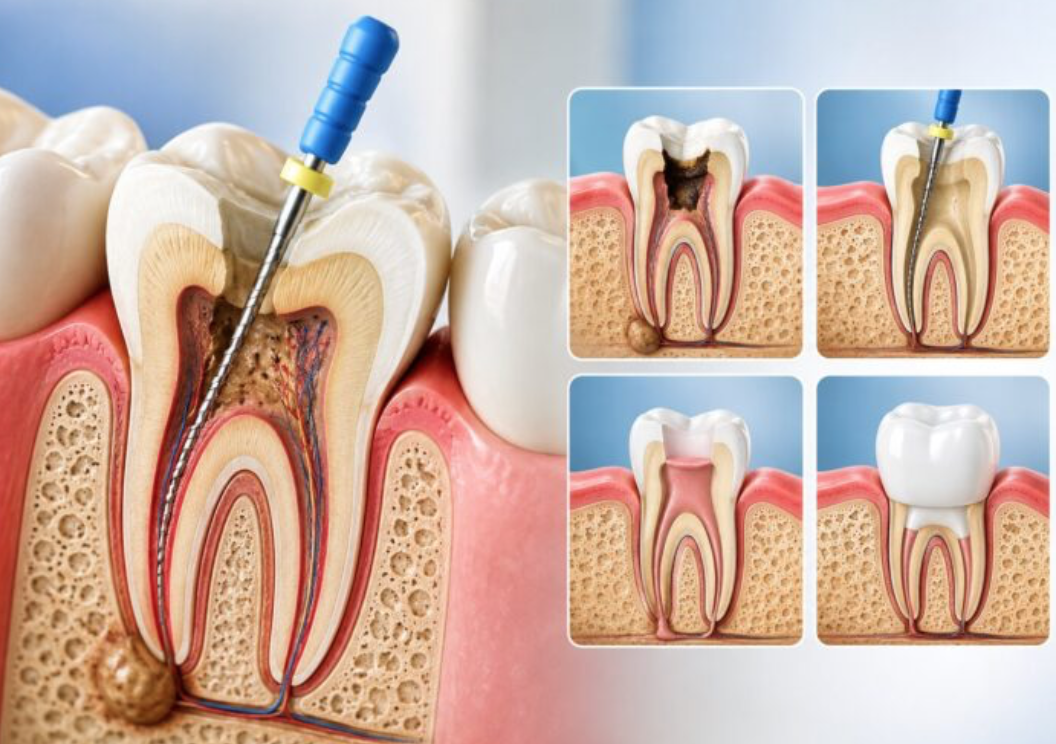
Inside every tooth is a soft tissue containing nerves and blood vessels. Deep decay, cracks, trauma or repeated dental procedures can cause this tissue to become inflamed or infected.
During RCT, we:
- Carefully access the inside of the tooth.
- Remove the infected or damaged tissue.
- Clean and disinfect the root canals.
- Seal the canals with a suitable filling material.
- Restore the tooth so that it can function again.
Local anaesthesia is used to numb the tooth and surrounding area, so the procedure is designed to be comfortable, with minimal to no pain during treatment. Any discomfort after the appointment is usually manageable with appropriate medication prescribed by your dentist.
Is Root Canal Treatment painful?
The idea of an RCT often sounds more frightening than the actual treatment. With proper local anaesthesia and modern techniques, the procedure itself should be comfortable. Some tenderness or sensitivity may occur after treatment, particularly when the tooth was already infected or painful. This is generally temporary and can be managed with medication when required.
Can RCT be completed in one visit?
Sometimes, yes. The number of appointments depends on factors such as the extent of infection, the condition of the tooth and the complexity of its root canals. Some teeth can be treated in a single appointment, while others may require two or more appointments to allow adequate cleaning, disinfection and healing.
Is Root Canal Treatment successful?
Root canal treatment has a high success rate when the tooth is suitable for treatment and is properly cleaned, sealed and restored. However, no dental procedure can guarantee success in every case. Some teeth have complex or unusual root anatomy that may not be fully visible on routine X-rays, making certain canals or areas difficult to identify and treat. Other factors, such as cracks or the condition of the surrounding tissues, can also affect the outcome.
What if a previous Root Canal Treatment has failed?
A tooth that has previously undergone RCT does not automatically need to be extracted. In selected cases, Re-RCT (repeat root canal treatment) can be performed. It may be recommended when infection persists or returns, when a canal was missed or inadequately treated, or when the previous root canal filling needs to be corrected.The tooth is carefully evaluated first to determine whether Re-RCT can give it a reasonable chance of being saved.
Removing a tooth can sometimes be necessary, but extraction should not be the automatic answer when the natural tooth can be treated and retained.
At Dr. Zar’s Dental Clinic, we evaluate the tooth, explain the available options and recommend treatment based on its condition, prognosis and your long-term oral health—not simply on the immediate problem.
'Because whenever a natural tooth can be predictably saved, keeping it is worth considering first.'
Why save a natural tooth?
Your natural teeth are designed to work together. When one tooth is lost, the neighbouring teeth can gradually shift into the empty space, affecting your bite and making cleaning more difficult. Depending on the location and circumstances, missing teeth may also affect chewing, speech and appearance. Replacing a missing tooth with an implant, bridge or denture is possible, but it involves additional treatment and expenses. When a tooth can be predictably saved, preserving it with RCT is often a simpler and more economical option than removing it and replacing it later.
What happens during a Root Canal Treatment?
Inside every tooth is a soft tissue containing nerves and blood vessels. Deep decay, cracks, trauma or repeated dental procedures can cause this tissue to become inflamed or infected.
During RCT, we:
- Carefully access the inside of the tooth.
- Remove the infected or damaged tissue.
- Clean and disinfect the root canals.
- Seal the canals with a suitable filling material.
- Restore the tooth so that it can function again.
Local anaesthesia is used to numb the tooth and surrounding area, so the procedure is designed to be comfortable, with minimal to no pain during treatment. Any discomfort after the appointment is usually manageable with appropriate medication prescribed by your dentist.
Is Root Canal Treatment painful?
The idea of an RCT often sounds more frightening than the actual treatment. With proper local anaesthesia and modern techniques, the procedure itself should be comfortable. Some tenderness or sensitivity may occur after treatment, particularly when the tooth was already infected or painful. This is generally temporary and can be managed with medication when required.
Can RCT be completed in one visit?
Sometimes, yes. The number of appointments depends on factors such as the extent of infection, the condition of the tooth and the complexity of its root canals. Some teeth can be treated in a single appointment, while others may require two or more appointments to allow adequate cleaning, disinfection and healing.
Is Root Canal Treatment successful?
Root canal treatment has a high success rate when the tooth is suitable for treatment and is properly cleaned, sealed and restored. However, no dental procedure can guarantee success in every case. Some teeth have complex or unusual root anatomy that may not be fully visible on routine X-rays, making certain canals or areas difficult to identify and treat. Other factors, such as cracks or the condition of the surrounding tissues, can also affect the outcome.
What if a previous Root Canal Treatment has failed?
A tooth that has previously undergone RCT does not automatically need to be extracted. In selected cases, Re-RCT (repeat root canal treatment) can be performed. It may be recommended when infection persists or returns, when a canal was missed or inadequately treated, or when the previous root canal filling needs to be corrected.The tooth is carefully evaluated first to determine whether Re-RCT can give it a reasonable chance of being saved.
Removing a tooth can sometimes be necessary, but extraction should not be the automatic answer when the natural tooth can be treated and retained.
At Dr. Zar’s Dental Clinic, we evaluate the tooth, explain the available options and recommend treatment based on its condition, prognosis and your long-term oral health—not simply on the immediate problem.
'Because whenever a natural tooth can be predictably saved, keeping it is worth considering first.'